Showing posts with label wildlife. Show all posts

Sunday, April 5, 2015

Passports and the Green Mamba

In Zim, everyone knows what a black mamba is.  It's a snake... And not just any snake, but a highly venemous, fast predator related to the cobra.  Here is the last time I (knowingly) crossed paths with one:


We pulled up to a parking lot and there it was, sitting between us and the store....  We went shopping elsewhere.

Now here is what most Zimbabweans refer to as "the green mamba":


The power of your passport can be a fascinating topic when you live abroad and suddenly realize there are number of perks that come with belonging to a certain passport club.  And a number of limitations if you don't... 

The passport is a funny thing.  Well, funny, that is, if you're an American.  In Zimbabwe, it's no laughing matter.  With the help of outspoken leadership and political pariahood, Zimbabwean passport holders have been seeing a lot of closed doors these days.  

The "green mamba," as Zimbabweans call it, stands as a symbol among many locals as a reminder that they are shut out of access to other countries, despite the languages they may speak or their ancestral backgrounds. As one of many examples, my friend -whose grandfather holds the key to a city in Great Britain, fought in their army, and was sent to Zimbabwe as part of his military duty- reminds me that she is being made to feel less and less welcome in her home country of Zim, where her rights are not systematically equal to that of every other citizen in the country. Yet, though she feels the government's pressure to push out those colonialist families who have now called Zimbabwe home for generations, she has no where else to go.  "All we can do," she once told me, "is teach our children to marry someone outside of the country! My husband and I say, 'Don't marry for love!  Find a good passport first!'" Though there is a humor in her speaking, there is also sadness. "We have nowhere else to go.  This is home, eh?  Whether they want us here or not." When times get tough in the country, citizens do not get the same options to move across borders as we Americans confidently have.

Most local Zimbabweans have their own stories. Some involve the limited number of times one can apply for a visa in a foreign country. Some involve getting all the way to the other country before being denied entry. Some involve having to show a great deal of money in  a bank account, as well as proof that one is returning back to Zim eventually with a job waiting for them. Some involve proving familial connections through documentation extending as far as turning in mortgage papers for the homes of in-laws in other countries. And all involve hours of running around and completing interviews to get the correct paperwork and approval stamps.

Visas for those citizens of Zim are an arduous, expensive, full time job to say the least.  As political climates ebb and flow, companies devoted entirely to getting locals visas in other countries are still learning how to jump through hoops decades into service. Travel and moving can be a tricky thing when no one will have you. 

Apparently nobody wants a green mamba knocking on their door....


To view this fascinating graphic up close, check it out at its source: http://awesome.good.is/infographics/how-powerful-is-your-passport/516

Saturday, January 17, 2015

The Giant Rat

http://www.loe.org/shows/segments.html?programID=03-P13-00025&segmentID=7

Well, the good news is that the animal eating all of our garden grown vegetables was not a gray rat.  The bad news?  It was a giant rat.  

No really.  That’s not my own adjective or nickname.  It’s a giant rat.  That’s the species that took over my yard, gardens, and comfort zone. (I am sure there is some sort of Princess Bride “Rodents of Unusual Size” joke to be made here, but that would make my husband way too happy and I don’t want to encourage him.)

After something began gnawing our tomatoes and eggplants in large ways, with scratch marks on each side, I approached my gardener.  "It's a frog," he had said. Yes.  Same gardener who I caught standing in the garden, hose in hand, watering plants in a rainstorm.  Oh, I miss Shoman.

So... call me crazy, but I wanted a second opinion. It was the perfect time for one; that afternoon an exterminator was being sent to the house after a large something had gnawed a hole right in the side of our house and could be heard overhead scurrying around at night.  The exterminator was to come, confirm that the animal was not inside at the moment, and then we would promptly have the wall patched to keep it out.  My totally humane plot to rid our house of critters.  Well, aside from the unavoidable lizards and flatty spiders that donned our walls around the clock. 

When the exterminator came, I approached him about the vegetables.

It was definitely a giant rat.

The giant rat is an animal commonly found in tropical and subtropical areas.  In Africa, there are two species: the Gambian pouched rat, and the giant pouched rat.  These omnivorous critters love to live in old termite mounds, forests, and thickets... and our yard was perfect.  With a thick bamboo grove next to our largest veggie garden, and a large abandoned termite mound on the other side, they were in heaven.  And probably setting up shop for the long haul.  Known for their enthusiastic breeding capabilities, the giant rat is considered a dangerous invasive species that can hoard so much food in its mouth (hence the pouch name) that at times it cannot get through the door of its home upon return.  There have been reported cases of these rats killing babies and the elderly in South Africa, so though they look cute, they are not to be messed with. 

The exterminator had joked with us, as the giant rat is prized as a sought-out food in a number of African countries. Why didn't we just consider them part of our farm?  We could have a braai (South African word for barbeque) every day when they really started reproducing!

I am all for letting animals live and let live. But that was one day I put down my ASPCA card down and asked the exterminator to help us.

Thank God neither of these pictures are my own…

http://www.dailymail.co.uk/news/article-1393836/Giant-rats-eat-babies-South-Africa-townships-separate-attacks.html

Tuesday, September 30, 2014

Hunting the Hupu


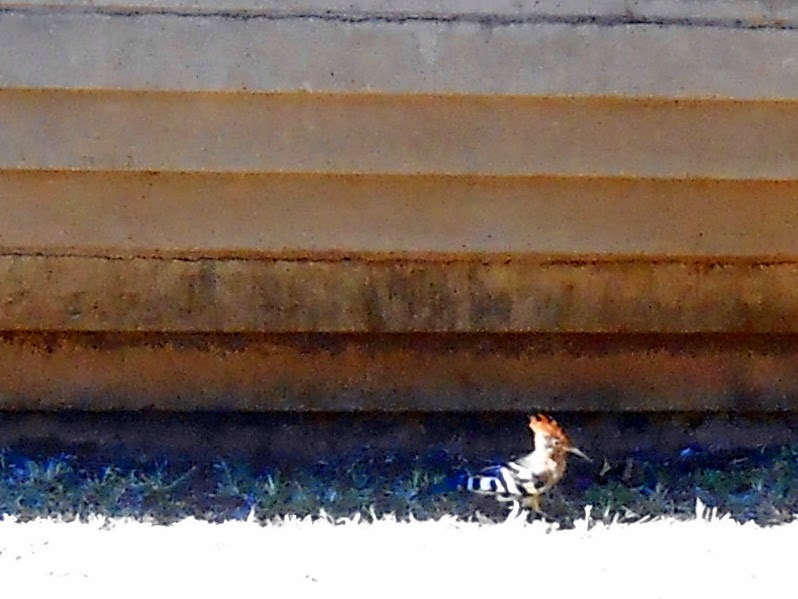
If for no other reason, our gardener thought I was crazy because of my stalkerish tendencies with one particular animal in our garden.  Meet the shyest bird alive... my African favorite, the hupu.  It took two years and this is it.

Four pictures.

These were the best pictures I got of this elusive, crazy creature that was always tauntingly sitting just outside our kitchen window.  Google this bird or click here to see what is also known as the "hoopoe."  It may be the national bird of Isreal, but this guy will always look like Zimbabwe to me.


Thursday, August 21, 2014

Ellie Dung

I've been doing some random thoughts on my post topics as of late, and here is another for you.

Elephant dung.

It is everywhere in any place even remotely, partially, tiptoeingly touched by the elephant species.  As an important part of the environmental cycles of Africa, the steaming pile of manure is an important way that these giant creatures contribute to their surroundings.  This is a nice way of saying that elephant dung is the ultimate African compost, churning tons of foliage mass into ground up hay every day.  In fact, most elephants produce over 100 pounds (over 50 kg) of dung per day!  But who knew it was important to humans, too?

I was sitting in the car in Western Zimbabwe one day waiting for my family to come back from a bathroom break.  We were literally in the middle of nowhere.  Not a human in sight for miles.  Then a car pulled up next to us.

It was strange, I first thought, that this car should park so close to us when there were, oh, 500 kilometers of space between us and the nearest parking space.  But the really strange thing turned out not to be the choice of parking, but rather why the car had parked.

A woman got out of the car with a plastic grocery bag.  She walked over to a fresh pile of elephant dung, and with her bare hands, she picked up as much dung as what would fit in the bag.  With no sheepishness at picking up a giant pile of feces, she set the bag in the trunk, returned to the car, and proceeded to drive away.

My mind was blown.  Seriously?  Had I just seen that?  Absolutely I had.  I had been the weird girl scrambling in the back seat, fumbling to get my camera to show my missing family what I had just witnessed...


When I asked a Ndebele wildlife scout later on that night outside of Hwange National Park about my strange encounter, he had nodded his head.  "Yes," he said. "Elephant dung is a very useful thing. It can be dried and burnt at night as a way of repelling bugs, or a lot of people use it ground up herbally for stomach ailments." He went on to explain that the smoke from burning ellie dung is believed to give people peaceful sleep and good dreams.

We may be living in the 21st Century, but how strangely awesome that there are still people out there that know some of the amazing uses for crazy pieces of nature.  Look up elephant dung online and you will find it is also a useful paper-producer, coffee filter, and garden fertilizer. 

And if nothing else, it makes one wicked snowball.

Tuesday, June 3, 2014

Guinea Fowl


Guinea fowl can be found anywhere throughout the country of Zim. It does not matter if one is in the city, out on a rural farm, in the middle of the bush, and in a coffee shop restaurant garden.  Guinea are everywhere.


To illustrate the country's love for the beloved guinea fowl, I want to share the secret -but actually quite well understood- recipe for guinea fowl that I have heard from a number of Shona and Ndebele master chefs:

Step One:  Clean one guinea fowl.

Step Two:  Put the guinea fowl in a pot of water. Add one large rock.

Step Three:  Boil the guinea fowl and rock for one week.

Step Four:  After one week, take the guinea fowl out of the water.  Throw away the guinea fowl.  

Step Five:  Eat the rock.


Sunday, June 1, 2014

Save Valley Conservancy


"It will be like driving through a zoo," our friend Jacqui had told us as we prepped for our trip.

Jacqui's words had stood in stark contrast to the conservancy's urgent motto, "Kana Yapera, Yapera" (when they're gone, they're gone), and I found myself unsure of what to expect from a place famous for its "dwindling wildlife numbers due to poaching", it's "large populations of tourist-attracting wildlife", its popularity among happily welcomed vacationing hunters, and its farmland.  It was confusing.  Could all of these things fit into one space?  And how?  

Though I visited the Save Conservancy a month ago, I still have not gotten around to blogging about it. This usually happens for one of two reasons: A) I am too bored or tired of it to write about it, or B) I have too many fantastic photos and dread having to put into words and pictures such a hard-to-describe place.  My lack of motivation up until now falls entirely under the B category.  I find myself more motivated suddenly, though, as we have just gotten word that poachers there took out two more rhinos -one with an eleven day old baby- just days after our visit.  Though chalked full of animals, these rhinos once again remind us that places like Save need as much help as they can get.

 The Save Valley Conservancy is a 3,400 square kilometer trek of land found in the South-East Lowveld of Zimbabwe.  It is a "non-profit," though this term is personally confusing, since much of the land within its territory is also used for farming.  Though there are many more complex explanations often involving attempts to avoid farm take-overs, here is a snippet from the organization, which (though it looks long) will say things much more succinctly than me:

As the livestock population grew, so the environment deteriorated.  Cattle ate all the native fertile vegetation and caused a degradation of topsoil.  The result was an overused and unproductive landscape.  Over time, a combination of events brought the cattle industry to a standstill.
Fortunately a new black rhino conservation strategy from Zimbabwe’s Department of National Parks and Wildlife Management catalysed the formation of SavĂ© Valley Conservancy.  With growing awareness of endangered wildlife and interest in ecotourism, a Conservancy offered an ideal solution.
In 1991 Devuli Ranch was divided into 15 smaller land units, and in November 1992 members agreed to shift operations from cattle ranching to wildlife preservation.  Cooperative and respectful interactions between landholders allowed the move to sustainable natural resource management.  The wildlife and habitats were acknowledged as assets to be nurtured, to ensure their benefits continued into the future.
Cattle and internal fences were removed, and in conjunction with the Department and the The World Wide Fund for Nature, we began monitoring and managing the restoration of the habitat.  In 1995 a 330km electric perimeter fence was built as a protective enclosure to protect the 3400 square kilometers/340 000 hectares of the conservancy.
The main goal of SavĂ© Valley Conservancy was to restore the land’s full natural potential while protecting the black rhinos from extinction.  Today we reap the successes of nearly two decades of work, and continue to focus on reinstating the land to a balanced ecosystem.


For those of you tired of reading, here are a few personal photos -selected from my shutter-happy hundreds- to give you a taste of this gorgeous wildlife expanse:


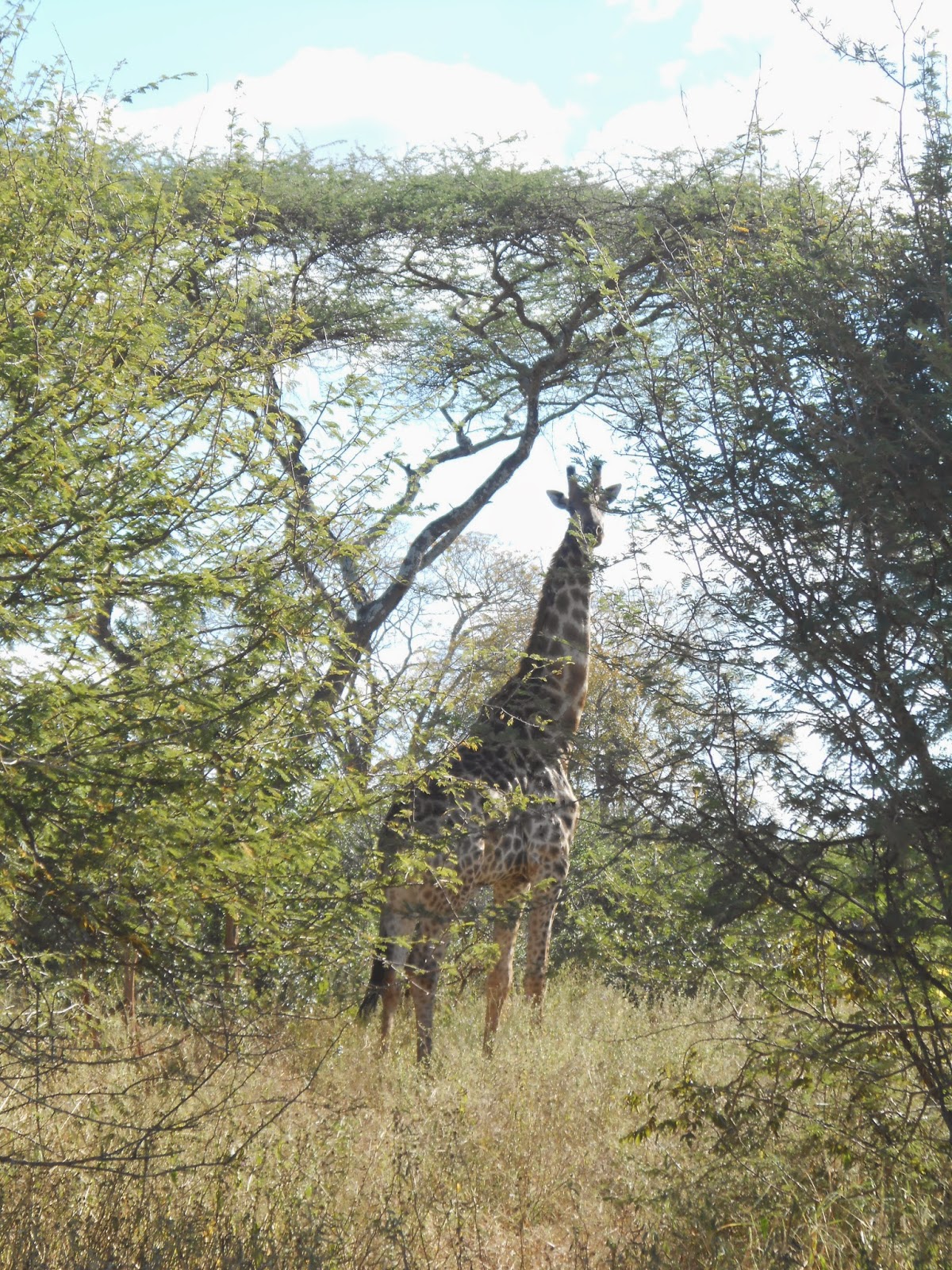
Africa's supermodels: Please appreciate my 8,000 giraffe pictures.  I paid them to pose.


We had to forge the Save River to get to the lower half of the conservancy on our route.


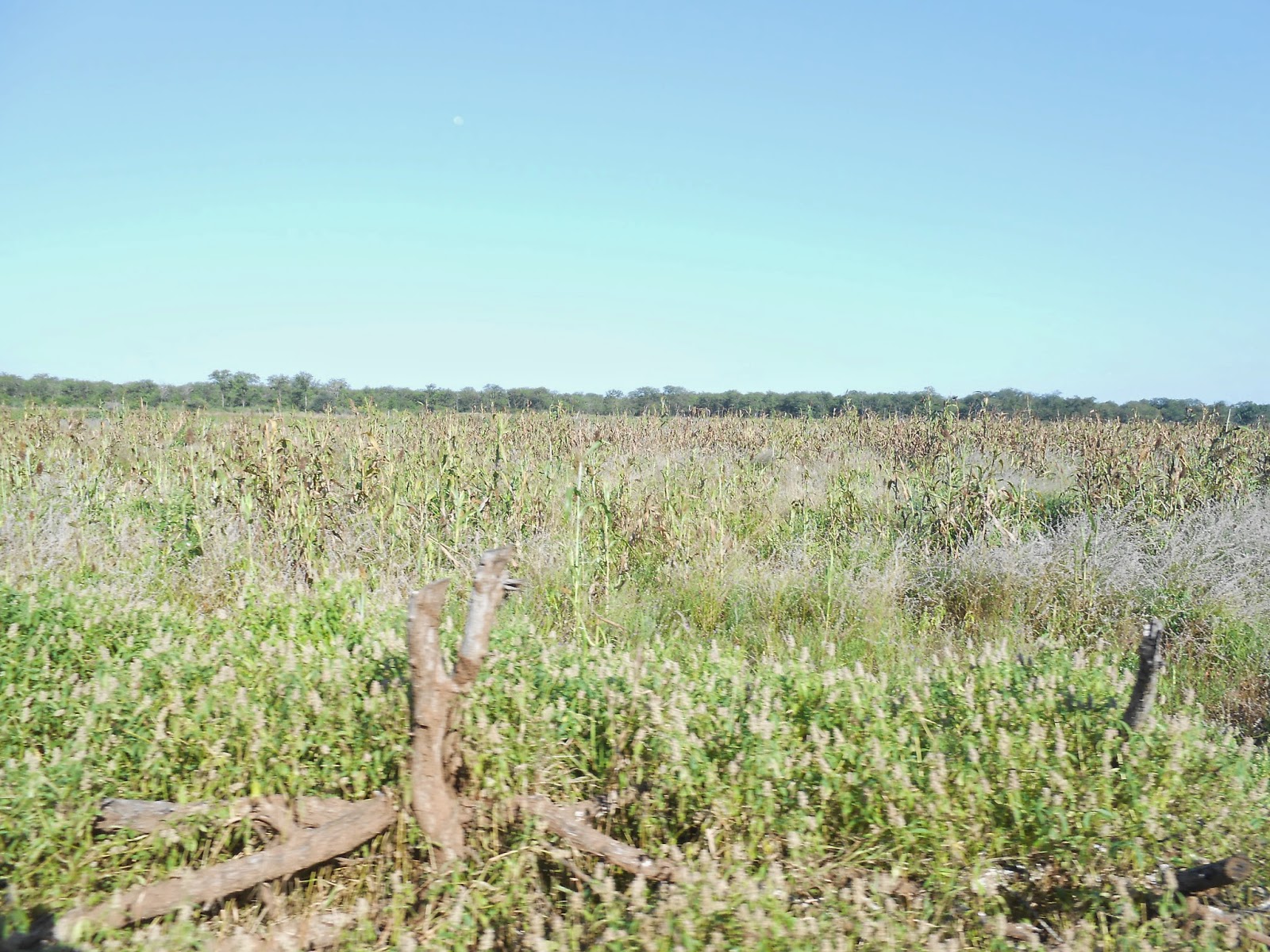
Farmland in the middle.


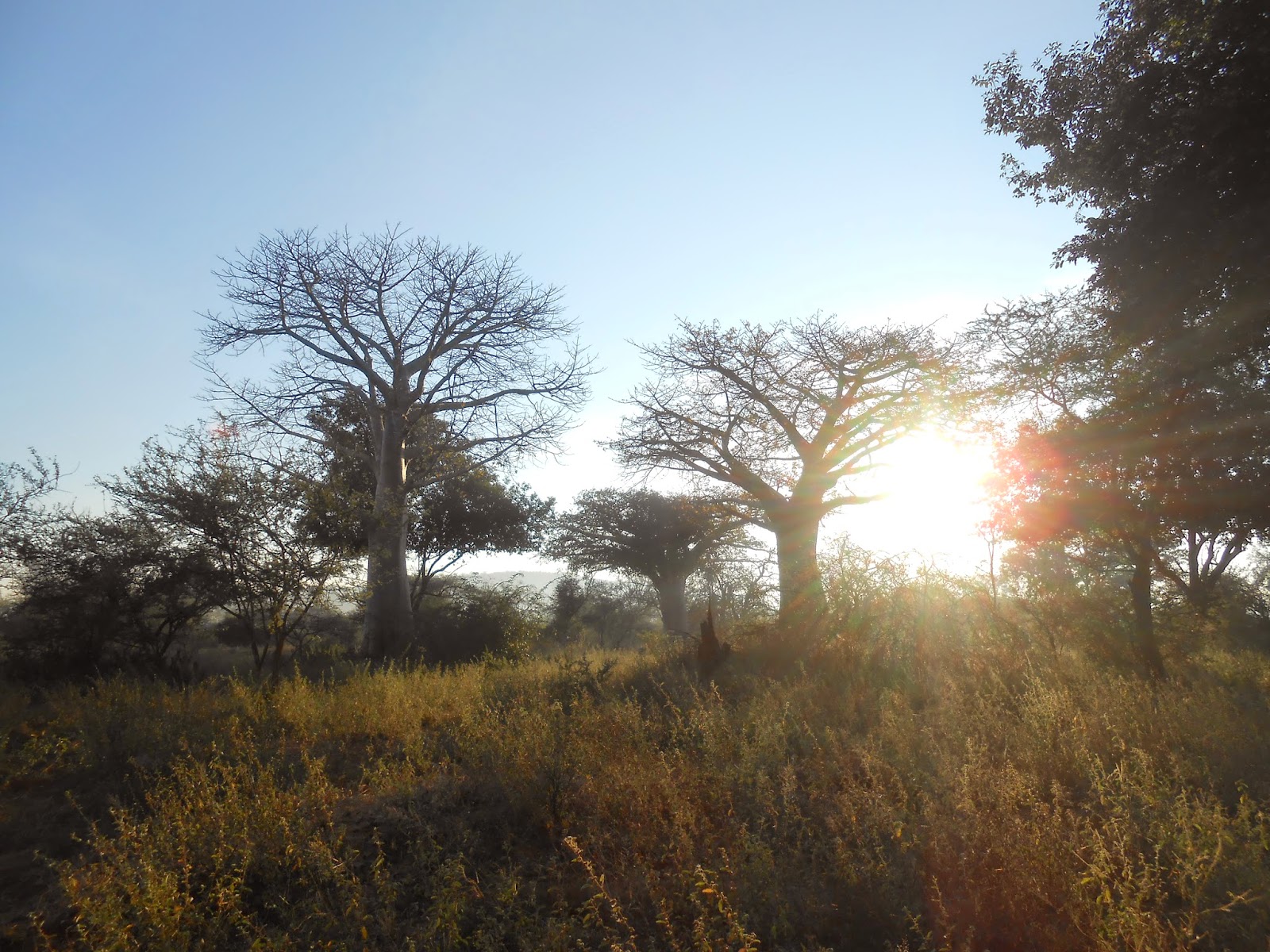
Baobabs galore.

        
Impala galore, too.


Tracking a herd of buffalo in the hot hot sun.


To read more about the conservancy, please check out their website:  http://savevalleyconservancy.org/