Showing posts with label money. Show all posts

Tuesday, May 20, 2014

The Bargaining Thing...


I was disgusted.  

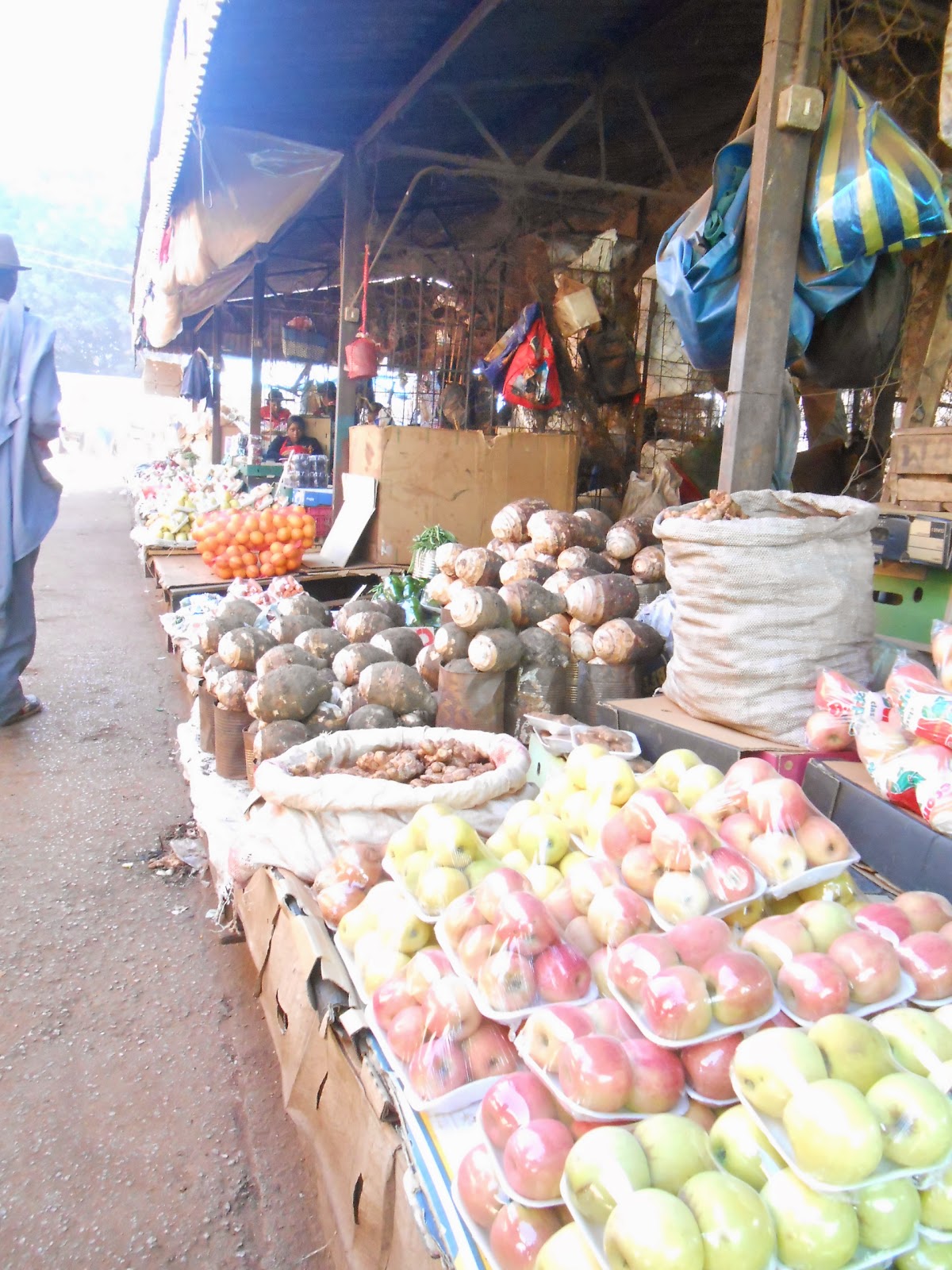
Our third day in Zimbabwe, we sat with new colleagues, all American, and gabbed about our backgrounds and prior travels. As the conversation strangely turned to a few loud men discussing their bargaining techniques, I became less than impressed.  These over-confident men bragged about their skills lowering the dollars and cents they paid to people living farther below the poverty line than they could ever get coming from a country like America. I felt like I was listening to a conversation of Wall Street CEOs figuring out how to scrape even more cream off the top.  What difference did an extra dollar or two make to them, while a dollar could buy that vendor’s entire family dinner?

People back home ask me all the time how we shop and how we deal with "the bargaining thing." It's a hard question to answer, and I have certainly evolved.  At first I approached the markets differently than many of our new, well cultured, colleagues.  Though Kurt and I were scraping by with student loan debt and an unexpected mortgage payment that followed us to Africa at the last second, concepts no market vendor could possibly understand, I just decided that I would either pay what the vendor asked, or move on. No hemming and hawing, no sly negotiation, no insulting their products.  Just a yes or no. It seemed decent. And I was happy.  And it worked.  The problem was, I usually never bought anything.

After I’d been in Zim long enough, it became clear.  As my housekeeper and a number of others have explained to me, there is a Shona price.  There is a white person price.  And if you open your mouth to let them hear your accent, there is an American price.  “Americans are the most guilty, so that is why this works on them,” my housekeeper Ziwone had laughed.  Racial complications aside, she went on to explain that it was insulting to someone when I did not bargain, but just asked a price, said “okay,” and walked away.  “No one will accept a price that will make them go broke.  Bargaining is in our culture. It is more rude to ask and walk away than to try to negotiate.” Meanwhile, I watched as I came home with tomatoes twice the price of my neighbor’s, and one head of cabbage when the housekeeper would have gotten two. And forget about souvenirs.

Two years later things are different.  I’ve lived in a bargaining culture that has slowly worn me down and subconsciously evolved my thinking while I have been busy looking at chotchkies and curios.  I now have a method, which usually involves asking for the price of two other things before I find out the price of what I really want.  I know what things cost from the source, and what the mark-up is.  And I know how to unapologetically ignore the pushy vendor that will not get out of my face. Somehow when I wasn’t watching, I went from being the “guilty” American to being a savy shopper proud of saving a dollar here or there.  I patted myself on the back for being thrifty while living on one income… And suddenly I realized it was quite the same way I had done while living in the US.

I’ll admit it.  When I lived in the States, I would occasionally drive to Walmart or a different grocery store across town, all to save a dollar.  Though I always preferred to support smaller businesses and local (often more high-quality) products, there were times my wallet spoke louder than my ideals.  I was happy to find a bargain.  And it was how I made ends meet.

But recently our visiting guest, Kyle, unintentionally reminded me about something very important that I had nearly entirely forgotten after living in an African bargaining culture for two years. I watched as Kyle, absolutely uninterested in buying a product, chatted with vendors about their process and goods.  I watched as he kindly negotiated, and I remembered what it was like to be a soft skinned American wanting to remember my privilege. And I remembered once again that a dollar does make a huge difference to someone who has very few. 

The bargaining thing is more personal; I have to say no to someone’s face instead of to a numb Mega-Mart shelf.  There is inherently more guilt associated.  But there is also more humanity.  The Mega-Mart shelf is eternally more comfortable; there is a price and you take it or leave it. But what we forget when we shop like that is that there is still a little man or woman making the item. He/she’s just a few more steps removed, so the potential guilt at knowing someone is being paid pennies for their hour of work is farther away from our conscious thought.  The Mega-Mart shelf may be an easier option, but as Kyle so wonderfully reminded me, there is also something very powerful about the human interactions and learning that come from the process of bargaining face to face.

I’ll be honest.  As with so many things, when it comes to the bargaining thing I am still uncomfortably dancing around to find my footing on a happy medium.  It is easy to become desensitized when you find yourself in a different geography and, over time, evolve for better and worse away from your original values.  Wanting to represent your family’s budget smartly in contrast with wanting to give a small local vendor their fair share can feel challenging… But the more I think about it, the challenge exists anywhere I live…  whether in America or Africa.  


Tuesday, January 7, 2014

Couldn't Say It Better

You've heard me talk about it before.  Finally.  I've found someone who shares my fascination 
with the high prices of goods found in my African country. 

When husband Kurt and I decided to move to Africa, we got online to do a conversion calculator.    
We wanted to see just how cheap our new country would be.  We typed in the numbers.  
And typed them in again. And again.  Surely there must be some mistake. With a median yearly
income in the lower hundreds, there was no way a human being could live in this country 
with those costs.  We chalked it up to a severe glitch in the conversion system and started 
packing. 

A few months later we found ourselves stepping into our first grocery store on 
the continent and nearly choked.  Still today, we spend more on our monthly grocery bill here 
than on our previous organic only diet from NYC Wholefoods.  I haven't been able to 
articulate costs here well without a lot of neccessary access to the telling economic facts and 
figures that narrate my beautiful country's history.  All I have is anecdote after anecdote of 
stories I hope to someday share.  In the meantime, this perfect article explains it all, with facts 
and figures to boot.

Please do check it out:

The Shockingly High Prices of One of Africa's Most Impoverished Countries:

http://www.newrepublic.com/article/115925/zimbabwe-prices-why-are-they-high-new-york-citys

Sunday, June 23, 2013

The Cash-Based Society

It was not the bug netting or malaria concerns, boiling water, or bad roads that made us find ourselves surprisingly uncomfortable when we first arrived in Africa.  It was carrying cash.  

Like the typical Americans, we physically touched money very little throughout our lives in the US.  Instead, our bank account was a numbers game, affected by electronic paychecks and our plastic debit card. Bills went in and out through transfers we never saw except for number changes on our computer screen. But here in our country few places accept credit card, and those that do often have connection problems to actually use their machines.  As we got settled in, we found ourselves doing something absolutely foreign to us... touching paper cash.

In general the location of your money depends on your economic status.  The less you have, the more
likely you are to keep it in your bra, underwear, or somewhere else on your person. Many locals do not trust banks in our country, and instead keep all of their cash and savings on their properties.  The very privileged keep theirs in foreign banks.

As so many of our local friends say with surprised looks on their faces when discussing things like mortgages and student loans, "But how do you pay for something with plastic if you don't have money for it??"  The concept of purchasing before earning is strange.  And risky. "We only buy what we have money in hand for."

The results of having a cash-based society can be seen in a number of ways, but one of the most blaring is in home building.  People build homes in pieces.  The result is a collection of empty houses that sit in some of the most expensive neighborhoods of my city.   Leaving a house open would be impossible in our old American neighborhoods; the elements, interacting with the framing of the house would deteriorate the home before even a few years passed.  But here, these monster skeletons of concrete sit as solid ghosts throughout the city, larger than any family of twenty could need. These "empties," as we call them, sit, boastful of the expectations of potential wealth to come, and wait for the money to be made.

Here are just a few (on the gloomiest day), all in our neighborhood:


Until a fence and gate are in place, squatters live in or around some homes.  In others, many people pay a family to live in a shed on the property to keep guard.


We walk past this house every day.  A giant television satellite sits perched in an empty second story, while the family lives in a beautifully finished first floor with a perfectly manicured yard. Just don't look up and it's a picture perfect property. This is what the opposite of getting a mortgage looks like.

Wednesday, August 22, 2012

Money, Money, Money

We anticipated that getting used to a new monetary system was to be a small transition for us… Zim uses the US Dollar as its currency. This is because in 2008 and 2009, a period of time many locals refer to as “The Imbalance,” inflation reached 100,000%.  The country’s own money became virtually worthless, as the crashing economy left people scraping for food and supplies with no way to pay for things.  As one of my friends here says, “I had just had [my baby] in mid 2008, and his entire first year of life, I would drop his sis at school, put him into the car and spend the entire day driving around looking for food until it was time to pick her up. Stores were empty.  Not a thing on the shelves.” The USD was adopted to restore some sense of stability, though nervous rumors still abound about currency changes.  Our transition from USD to USD was surprising in some ways. Upon arrival we quickly learned a few unexpected things about our money here:

1) Coins do not exist here. …Well, sort of.  Nothing less than a dollar is used to pay for anything.  However, prices are most often not an even dollar amount.  SO, when checking out at the grocery store, if the bill is $19.20, you must pay $20.00, then receive a store credit for 80 cents.  If it is a chain store, however, the store credit will rarely transfer to a store of the same name but in a different location.  Some stores also do a swipe card to let you keep a log of your extra credit, tickets in place of printed receipts, or will randomly give you South African money if they have it on hand.  Our wallets are full of papers instead of coins now, all credit receipts to be cashed in (if you remember) the next time you go to purchase an item.  This national policy has to almost always work out for the benefit of the company.  

The one exception to this seems to be the “bus”- a whole other blog of its own. The bus costs 50 cents to ride here, but if you pay with a dollar, “change” is given in the form of South African tokens called rands, apparently mostly only good for another bus ride. These brass colored rands have “50 cents” written on them, but it actually takes two of them to equal fifty cents for a bus ride, and four of them to equal a dollar.  Why?  No idea.

2) The one bill that is pristine here?  Two dollar bills.  Remember those things?  I thought the US stopped making them years ago, until I just did my research this week and found out that the bill is still actually made and in circulation in the US.  The scarcity of $2 bills in circulation in the US, along with a lack of public awareness that the bill is still in circulation, has inspired urban legends and, on a few occasions, created problems for people trying to use the bill to make purchases in the States.  Which I guess is why you can find them everywhere here.  They are the only barely used piece of money to be found.

3) New dollar bills are more than rare here.  Shop keepers love tourists and foreigners, because they come with new bills. In the US, the Treasury takes old bills out of circulation and replaces them; apparently there is no one here doing that.  Here are two dollars from our African country--so dirty and frail it’s hard to touch them-- compared to one we brought with us from the US.