Showing posts with label The Bubble. Show all posts

Friday, June 6, 2014

Bananas for Banoffee


Word has it that if I introduced American readers to pavlovas last week, I should not wait too long before also getting to another coffee shop classic in Zim, the banoffee pie.  Again tied to colonial roots, this dessert adopted in Zim was actually only developed in the 1970s in Britain but quickly made its way here by popular demand and a never-ending supply of bananas!  Made from gooey toffee, fresh bananas, whipped cream, and a crumbled biscuit or pastry base, I am convinced it may be impossible to find a better pie out there... Meet another dessert in The Bubble: the irrepressible, irresistible banoffee.


Monday, May 26, 2014

Pavlova, Please


So for those of you reading this blog from a place with British ties, you will think this is old hat.  But I have to introduce my American friends to this amazing food that I have discovered only since moving to Africa.  It is not hard to see that merengue is everywhere in my country, found on grocery shelves in a number of colors and shapes as a clear sign of my country's previous colonial ties.  (For those of you Americans that -like me- think this sounds weird, let me clarify that we are not talking about the type of merengue found on top of a lemon-merengue pie, but rather a cooked, crunchy piece of heaven that dissolves like sugar in the mouth.)  And the best use for this merengue?  A beautiful thing called a pavlova... A slice of merengue on the bottom is covered with whipped cream or a granadilla/lemon curd mixture, then topped with fresh fruit.  I just can 't say no...


Tuesday, May 21, 2013

Monday, May 20, 2013

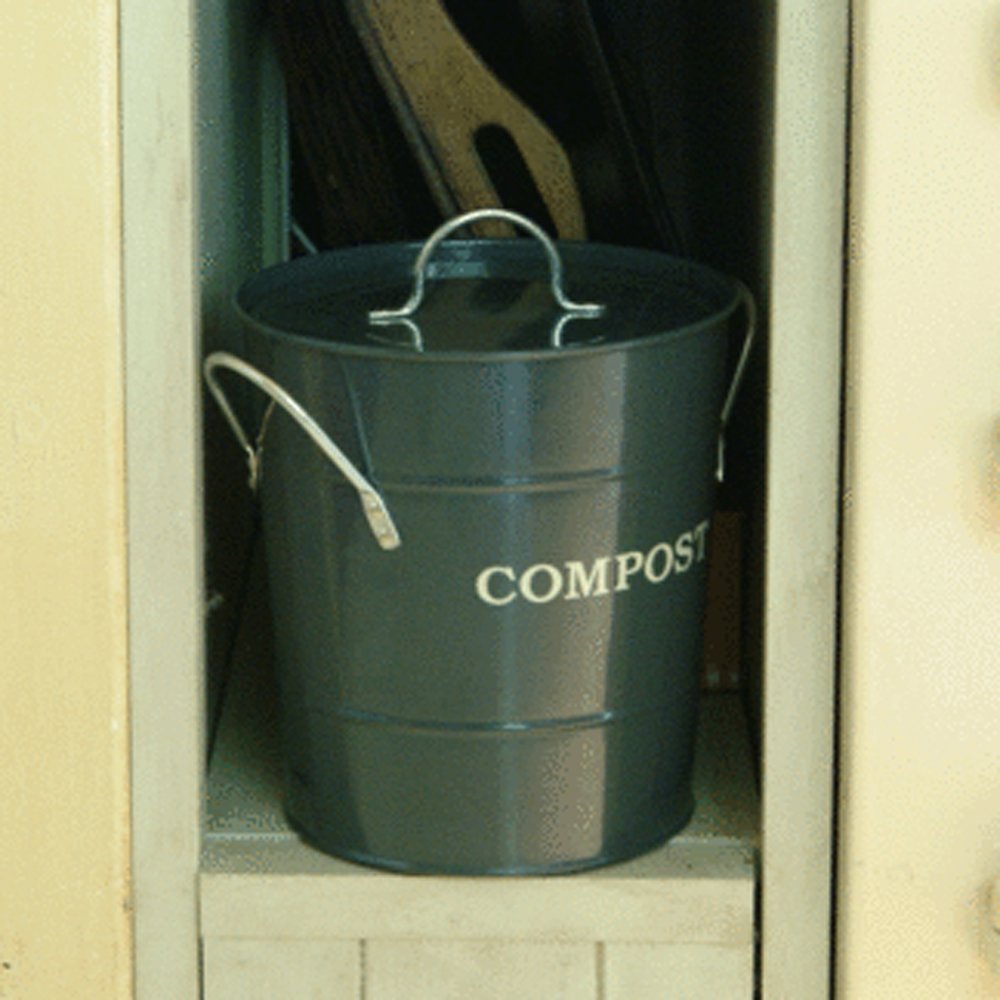
Bounty Meditations: The Compost Bucket


Our compost bucket speaks to me every day.  And usually it's not very flattering.

Our compost bucket is one of those things I find myself taking care of whenever possible instead of letting anyone else touch it.  Because it's in that bucket that my different upbringing is pointed out.  I don't consider myself a wasteful person, but I don't eat the core of the apple.  I don't eat the rind of the watermelon, or the skin of the mango.  My child doesn't eat the tooth-breaking seeds found in guava.  And he likes the skin cut off his pears.  If I humored him, he'd still have me peeling his grapes. Burnt food in the bottom of the pot?  Put it in the compost. Unappetizing five day old leftovers?  Compost.

Our gardener's family, in contrast, has almost no compost.  Though they will throw a stem out the door here and there at times, they waste nothing.  I remember my horror the first time I let my housekeeper make us a meal called "chicken bones." This common Shona dish is made when the leftover chicken bones from a meal are gathered from everyone’s plates, rinsed, and stored for the next day.   They are then boiled in a pot with spinach or rape (both large tough greens here) and an (MSG laden) powdered chicken seasoning.  The dish is served, chicken bones and all, with Sadza.  One has to stop chewing and pull sharp pieces of bone out of one's mouth to eat it.  It is considered a special treat, as the amount of meat consumed in the Shona diet can be sporadic, dependent upon the economic circumstances of the family. Tasty, but I admittedly stopped at cracking the bones open to suck out the marrow.

On the contrary, we have cooked for our housekeeper and gardener a number of times.  We made a large family dinner for our gardener’s family one evening, and sat around our dinner table chatting as the gardener’s two children, Shown and Allister ("Lilly"), ate with Jonas on the floor.  Jonas (usually a good eater) had taken four bites, declared he was done, and had run away to play, leaving his full plate on the floor.  Meanwhile, five year old Shown ate a full two giant plates before asking his parents to be excused.  Little Lilly, though, methodically ate three plates of food with his chubby two year old fingers.  Every time he asked for more, I heaped his plate full and watched his eyes sparkle as I set the plate back down in front of him.  It was way too much for a two year old, but I wanted him to feel free to eat as much as he liked without being shy about asking for more.  Showing my love by overfeeding someone?  Yep.  That's pretty much my style.

Partially into his third plate, though, Lilly slowed down.  Suddenly he started bawling, hysterically wailing a number of Shona words I did not understand. It was alarming; Lilly was in a great deal of pain. I looked at the gardener's wife quizzically as she rubbed his stretched tummy.  "I'm sorry, Madame," she had apologized, embarrassed. "Allister is crying because he cannot clear his plate.  He has tried as hard as he can but now he is in pain."

"You have to eat what you are given," Shown chimed in. "That's the rule!"

I looked at my child's rotting plate in the corner and embarrassment washed over me.  Jonas would eat a snack later, for sure, when it was convenient for him.  Whenever Jonas is hungry, he gets food.  Meanwhile I had made Lilly sick with my lack of understanding.  

Taught from an early age, it is a truly impressive characteristic of many Shona people in my country. Waste not, want not.  Clear your plate.  Eat when you can get it, even if it makes you sick.  Be grateful for calories.  It's a stark contrast to where I come from.   I come from a land of abundance, where the focus is on not eating too much.  Where obesity troubles more people than starvation.  Where diet obsessions like limiting calories and fats and carbs and any other latest craze originate.  Where we try to speed up our metabolism so we can eat more.  Where we make light hearted jokes about the strange things our Depression-era relatives are willing to eat.  Where I have complained about my propensity to overeat before polishing off my child's plate. Where, patting myself on the back for self control, I have scraped Jonas' half-eaten plate into the compost bucket.

That horrible compost bucket.  If only it didn't speak so loudly.

Sunday, May 19, 2013

Bounty Meditations: Rediscovering Words

In the U.S. I used the word bounty for cheesy Thanksgiving dinner prayers or deep discussions about paper towels.  But it means something different in Africa.  Actually, it means a lot.

“Hi,” an orphan girl had said as she sat down next to me recently in a rural orphanage an hour out of my city. She looked ahead.

“What’s your name?” I’d asked her, amused.

“I’m Isabelle.  It means my God is a God of plenty.  My bounty will be good.” I had nodded.  “What’s your name?” she asked.

“It’s Cheri. Nice to meet you,” I’d smiled.

“But what does it mean?”

“Oh, umm… it means my dear or my darling in French.” She looked confused so I continued, “It means my love.”

“And do you show it?” Isabelle looked at me with her eyebrows raised, expectantly.  I was pretty sure there was a forty year old in this kid’s body. “Do you show love?”

I had hesitated, not sure of how to answer. “Yeah… I hope so.  I hope that’s what people think of me.”

“Hope is not good enough,” she corrected me. “You must show it. You have to live your name.”  

Wow. Well, someone was teaching this kid, and apparently it wasn’t me. 

During a different orphanage visit I overheard children discussing the meaning of their names with a friend of mine. A little boy named Kutenda chimed in. “My name means you have to be thankful!" he had half-way announced proudly and maybe just slightly half-way complained.  Kutenda (actually meaning "to thank") was only four, but already he knew.

Words and names mean a lot on this continent.  They aren’t just symbolic. They are used as points of action and focus, like an idea one clings to. 

One of the most powerful words in my country is bounty.  On a continent where subsistence farming is common, where meager crops are life-blood, and where hunger and starvation are real, bounty is a focus. And certainly, Kutenda is right. You have to be thankful.  

When I mentioned this topic recently to a white local, she had looked at me surprised.  I realized once again that should I choose to stay in The Bubble, isolated from the non-affluent populations that are ever present but often ignored, I would never recognize powerful beautiful concepts, like bounty, that propel lives forward daily.  Over the next week I’m going to be sharing some quick thoughts about a word in which this blessed, affluent family could always use some more meditation.

Saturday, May 11, 2013

Shameless Plug


Okay, blog readers... I'm going to mention something we haven't shown or discussed a lot on our blogs: the orphanage system.  It keeps us busy when we're not chasing our three year old, teaching, or sharing our lives with you.  But now we could use a little help. 

My husband Kurt and I are starting a campaign to raise money for our orphanage work while we're living here in Africa. We are trying to do good things, make a real difference, and affect change on a continent that so desperately needs hope. Please consider taking a look at our work and fundraising goals on our website as we start our 45 day campaign for change.  We are hoping some of you out there have always wanted to help a place like Africa, but have not known how to make a direct impact. This is your chance...

http://www.indiegogo.com/projects/there-s-no-small-change-in-africa/x/3192441

If you can't give, no worries, no guilt.  But please please, consider posting our link to your facebook page, telling your friends and family, or just sending some positive thoughts our way.  We appreciate your support more than words can say.

These are no one's children.  Unless we claim them as our own. 

Thursday, November 29, 2012

If Ever You Need Perspective


If ever you need to feel humbled, move to Africa. Imagine moving your entire home full of belongings into a truck for Africa and your feelings at opening all of your items among people who make 100 dollars a month at best. We found ourselves in this position last weekend, when our container finally arrived -four months late, and just in time for Christmas. I was tickled after feeling months of desperation for the things we so "terribly" needed to make home feel like home.  As our gardener's wife helped us to wash all of our kitchenware I suddenly became acutely aware of my privilege.  I felt my face burn as I had Jesca wash boxes and boxes of things like our Parmesan cheese grater, ice cream scoops, and sushi dishes, the likes of which she had never seen, let alone been able to afford.  I quickly shut the door to the rest of the house, filled with containers and Jonas' newly discovered toys strewn about.  I opened the rest of our boxes with curtains closed while I thought about Jesca's boys playing in the yard with their stitched-together grocery-bag ball and felt a large dose of humbleness in my heart.


If ever you need to see the humor in things, move to Africa.  Among other things Jonas and I have been looking forward to, a bike and carrier have been on the top of the list.  We typically walk about four km a day on dusty paths and shoulders of roads in mid-day African heat.  I was tickled to finally have our bikes arrive, newly purchased just for our African commute.  What I didn't expect, though, was how humored all of the local Shona would be with our bikes.  Apparently a white woman zipping around town in a bulky bicycle helmet with a giant trailer wheeling behind her, helmeted baby trapped inside, is reason to stop and smile, to sometimes point, and almost always to always yell, "Mangwanani!  I like your bike!"  I am joyously laughed at with awe so often I preemptively start laughing at myself now whenever I pass someone.


If ever you need to feel cynical, move to Africa. Kurt and I checked each numbered item that came off our moving truck as six men labored in long sleeve uniforms in place of ramps and dollies.  As the last piece found its way into the house, the head mover and Kurt looked at each other.  "There is a lot missing," they agreed.  We went through the lists again, having the movers unwrap every piece of furniture to make sure no package was stuck inside another.  When the movers finally left, we spent the rest of the weekend ripping open boxes at an exhaustive pace, rather than with joyful discovery, trying to recall what and how our American movers had packed, and writing down almost $40,000 worth of stolen items.  Everything from electronics to a computer to table legs to design work to the 75 Christmas ornaments Jonas and I made together last year to the ten books I had handmade for each year of our marriage landed on the list. It rarely happens, though a pair of our friends had the same situation. The items were all accounted for when we arrived in the country, but four months of visa waiting later, seals were broken and bonded storage turned out to be, well, not so bonded.  We are currently dealing with insurance claims and explaining to Jonas why he now has no tricycle or bicycle. Training wheels, yes.  Bicycle, no.  


If ever you need to feel gratitude, move to Africa.  I set aside some of the paper packaging and boxes from our move for Jonas.  He wanted paper to draw on and boxes to build a fort. Upon leaving, the movers asked if they could take the mountain of bubble wrap sheets that had been taken off our large furniture items.  I thanked them, saying, "absolutely," so we would not have to burn the plastic in our yard.  Our gardener pulled me aside hurriedly and whispered, "Madame, can I keep it? I can sell it. People need beds."  I had totally forgotten that many of those who are not fortunate to have mattresses here sleep on scavenged cardboard and, if they're lucky, paper and bubble wrap.  My trash was just what others had been hoping for.  My bed has washed a wave of gratitude over me each time I've walked past it this week.


If you ever want to feel joy for the simple things, move to Africa. I have a favorite family Jonas and I pass every day on our trek; they are squatters who live among the foundational outlines of an incomplete house two streets from us.  We shout out greetings to each other and our babies whenever we cross paths.  (When they first encountered me zipping past on our bike, the father shouted, "HA!  So much betta!  Yo bike is very clever! I see you go fast!  Ha ha ha! Go fast baby!")  They are the happiest family I've seen. The family can be seen doing their laundry in a wheel-less wheelbarrow every afternoon.  One day I passed at an atypical time and watched the mother run full speed from a water spigot to the wheelbarrow, water pouring from the bottom of a holey bucket.  She got a few cups worth into the wheelbarrow, then turned around and started back to the spigot once again.  The beautiful part?  She was laughing the whole way.

If ever you need to feel conflicted, move to Africa. The one most important thing, we were warned by the school, is to never give away from your gate.  If you make the mistake of giving from your door, people will know where to find you.  And their relatives.  And their friends.  Over and over again.  Soon it will be hard to get out of your home.  So when an elderly man came to our gate last weekend asking for money and Kurt, who like myself believes in the value of giving, lovingly said, "Sure, just a moment," into the buzzer, I jumped down his throat.  ((This is after I encountered a begging woman last week that has been returning unwelcome to our next door neighbor's gate for over ten years after she was once helped out when she needed assistance for her sick baby. I admit I heartbreakingly wished her many blessings and denied her the money I recognized she desperately needed in a tactic of self-preservation I have felt guilty about ever since.))  Kurt and I then hissed back and forth with hushed voices about what to do, as he had just led the man to believe he was going out promptly, but I recognized that it would be me trying to get him away from our gate the next time he came and Kurt was at school.  While the man waited, our sad discussion turned to conversation about how we want so desperately to answer the human condition here with a loving approach, that we want to treat all human beings as though they were God themselves, and how much we resent living in a place where the rules of how to live keep our lives safe but make us feel as though we aren't living at the same time.  No matter how we chose, the discomfort of the situation remains present.  In the end, Kurt went out to the gate.  

If ever you need to feel certain, move to Africa. People ask me all the time if I regret moving to Africa, after such a challenging last few months filled with car accidents and visa issues.  My answer is always the same.  

"Never. Look at how much I've learned."

Tuesday, August 7, 2012

The Bubble

We knew it would be a big thought on our minds before we even got here.  We hemmed and hawed about how we would fit into it.  But we never realized it would be on our minds more than finding safe water, or avoiding malaria, or learning that we have to de-worm our child like a dog every six months.

"The Bubble."

That's what my husband Kurt and I call it.  This surreal African juxtaposition of walls and shanty towns, manicured lawns and dirt roads...  And actually, that description fails to describe the jolt that is our new life in an African city of haves and have-nots.  We definitely have been dropped into a bubble.  It's an immediate challenge-- recognizing with gratitude the surreal lifestyle of expansive square footage and amenities anyone would love, while battling the sickening guilt that not everyone is sharing in the blessing.

Though it's not at all our intention to stay isolated among the walls of our new home, which many easily do, please be patient with us. This blog will start in The Bubble. Here are some pictures of our new home, on loan from the school Kurt works for :

 
Our living room, with fire place and a bar behind it. We are calling the bar area our "coffee house" room.  There is no heating or cooling in any of the homes here; just vents on the tops of the walls.  These vents help the house to breath and house large black spiders that come out every night to rest at the top of the walls.  Harmless but eerie.

 
Our back patio, where we occasionally eat.  We will use this space with our two year old a lot during the rainy season.

 
Looking through our living room to our dining room.  Sliding glass door on the left, kitchen doorway up on the right.


Kitchen, full of windows and very large. The back door opens in two pieces, so most of the day with the windows and at least half the door open, the kitchen feels like it's outside. Washing machine, fridge, and pantry on left.

 
Kitchen from other side. Breakfast bar in the middle, oven and warming drawer in back, stove on back right.

 
Master bedroom leads into a dressing room as big as our last kitchen. Two more bedrooms, unpictured, are slightly smaller.  Also unpictured is tons of closet space in every room.

 
Two newly redone bathrooms, both the size of bedrooms.

 
Pool with fountain (out of picture) looking at one of our patios.


Trampoline on the side of the house.  Our Jonas is in love.  I call it a death trap, but he's already used it for about three hours, so my hesitations have not meant much.  There are probably more dangerous things in Africa...

 
Looking to our back yard from one of our three patios.  A children's playhouse (again, death trap) sits in front with a large area of gardens, fruit trees, and stone benches behind.  Also unseen are the staff quarters... a separate cottage, shed, and burning area.  The yard is approximately two acres.

 
Kurt and I laugh that we had to move to Africa to live on our first cul-de-sac.  The black gate is ours.  We have yet to meet the neighbors, whose ferocious dogs have kept me at length.  Dogs here are for protection, not cuddling. We all live behind gates and walls, with barbed wire and electric fences unseen above them all.

 
Coming into the gate.  Every piece of green space is manicured... It hasn't rained since February, but you can't tell. Can't wait to see the water bill!