Showing posts with label (a)musings/prominent writings. Show all posts

Thursday, April 9, 2015

The Narrative of Africa


Let’s take a minute to talk about something that has been punching me in the gut numerous times each day since the killings in Kenya.  As many of you following African politics know, this past week in Kenya four/five armed terrorists systematically separated the students of a Garissa University student body by religion, executing a total of 147 students who identified themselves as Christians.  As I scroll through my “newsfeed” of 45 ways to bake an onion, crucial camping life hacks, and cute puppies and kittens --I’m not throwing insults here; I do love me some cute puppies-- I am slapped with the lack of attention being given to the blatant brutality of others on the other side of our shrinking globe.  So my question is, why?  After all, I haven’t exactly posted the gruesome images of those nightmarish events, either.  But why haven’t I?


There are oodles of questions and suggestions we can offer up:


-Is it because the story touches on something so dark we don’t want to touch it with a ten-foot pole? 

-Is it because we see the victims coming from a place in which a lot of people unjustly die anyway?

-Is it because it feels too far away?

-Is it because we are talking about a continent that a number of us can easily ignore in our daily First World lives?

-Is it because we’d like to stay unpolitical or don’t want our nations involved in more efforts overseas?

-Is it because the victims seem so different from some of us? Racially? Religiously? Culturally?

-Is it because we don’t understand the perceived reasons for this injustice and therefore feel too ignorant to join the conversation?

-Is it because we choose whose deaths matter and whose don’t?

These are all interesting questions to juggle and conversations to have, but when we see the attention media pays to tragedies like 9/11 and Charlie Hebdo, we have to go deeper in our understanding of why these traumatic events that will change the face of Kenya forever have gone largely unnoticed by the First World.

I don’t have the answer.  In fact, like many of you, I admit I don’t even like touching the subject.  It’s painful.  And horrifying.  And scarier than ever to me when a group of people is against you not because of what you do, but simply because you exist. That’s the stuff Holocausts are made of. So trust me when I say that I’m processing some of the above questions, as well. 

But perhaps deeper in the heart of all of this is something I call The Narrative of Africa.  It may not at all be that so many of us, media included, don’t care.  But for us in the First World, what is the narrative we have assigned Africa?

 Is it dark?  Scary?  Dirty?  Unsafe?  Uncivilized?  Disease-ridden?  A violent zone of conflict?  Wild? Overwhelming?  In-accessible?  Uneducated?  Hopeless? 

We do have a choice in how we interpret places, what we know about them, and our pursuit of the cultures that find home within them. That is, if we open ourselves to them. 


It’s been interesting to gage reactions of those around me when they learn that I have just moved from Africa and Spain.  Nine times out of ten they will focus on the negatives of Africa before commenting on anything else.  Sometimes this takes the form of political commentary; at other times it involves ebola, famine, or other disease.  --The other one time out of ten is usually regarding elephants, but that is another story for another day!-- As anyone who has returned to the US after living in Africa knows, even the word “Africa” in one’s background gives a person instant street credit.  “Oh, they lived in Africa.  They must be (insert adjective here- most often: brave, interesting, or crazy)." And the funny thing is, that most of the people I speak to say that it is one of the places they’d most like to visit but are sure they will not ever go near.  Though an expensive plane ticket is often the off-the-cuff excuse for this opinion, when pressed further most people stammer on about things like immunizations… and not knowing where to go… or what they would eat… or not wanting to be sick… or how to do it safely… or, or, or, a number of other things that shines a light on their distorted personal narratives of Africa.  Nothing was as telling to me as when we had a set of enthusiastic renters for our Connecticut house suddenly fall through out of the blue at the last second because, when they had told their friends, everyone said that landlords living in Africa could only mean it was a scam. Ask me for twelve more examples; I've got them.  The word "Africa" elicits interesting personal narratives.

So here is my challenge to you.  If you, like me, are bothered by the lack of media attention given to the horrifying events of the past week, or to the 200 missing Nigerian girls, or to the museum attack in Tunisia, or to the Nairobi Westgate shootings, or to the 4 million political killings in the Democratic Republic of Congo, or to the alarming rates of sexual violence in South Africa, or to the violence that took place just today in Egypt’s Sinai, educate yourself.  Pick a place and shine some light.  For yourself and for others.  Care.

If we can one by one change the Narrative of Africa into a narrative of growth, development, creativity, hope, innovation, resource, and aspiration, THEN we make lost lives matter- independent of how the media pays attention.  When we change the Narrative of Africa to the bustling continent of hope, goodness, and ingenuity that it is, the easier time the world will have in seeing the connections of this challenged continent to other continents.  And even more importantly, the easier time the world will have in recognizing that African lives DO matter.

Take a moment to reflect upon your views of Africa, ways in which you could learn more, pieces of it that confuse or even scare you.  Let’s change the Narrative of Africa one person at a time. 

I'll start; you go next.


Friday, November 29, 2013

If Ever You Need Perspective, Two

Last year during Thanksgiving I posted a blog entitled, “If Ever You Need Perspective.”  The post quickly took on a life of its own. It has come back to me oodles of times through friends and associates that have received it from people I do not know. It has been re-posted and hit so often that I have followed it up, one year later, with a post on the same subject: 

If ever you need to feel humbled, move to Africa.  It was the day we finally got our car. Finally.  After a year of walking, renting, borrowing, and hitching.  Nothing was as sweet as finally -finally- getting a car to navigate a spread-out city full of thousands of struggling pedestrians and no sidewalks.  I was still walking on air and wondering how I would ever manage driving on the left when I walked into the kitchen.  Our housekeeper, Ziwone, stopped me with a pan of burnt oil used the night before for attempted French fries.  I looked in the pot, full of bits of old burnt fry, and said, “That’s trash.  You can compost it.” Ziwone, serious Ziwone who has never dared ask outright for anything, looked at me and moved toward the compost bucket with hesitation.  “It is terribly burnt…” I trailed off.  Silence.  “I could use this oil if you cannot,” she blurted out suddenly.  Her voice surprised both of us. I gladly told Ziwone she could keep the oil, and then walked toward the living room. My mind returned to our new car.  Out of the corner of my eye I suddenly saw Ziwone do a giddy jump before hurrying outside, pot in hand.  As I looked out the window Ziwone hurried to her gardening husband in the back yard with a huge smile, speaking fast Shona and gesturing like one of those women in shock over winning the lottery. Ziwone had changed from stoic, tired mother to starry-eyed child. I set my new keys on the counter.  And as I am reminded at least once a day in Africa, I was brought back to a place of humbleness and gratitude.  The pot of used oil, not the car, won on that particular day.


If ever you need to feel joy for the simple things, move to Africa.  After switching our car battery, a dead one sat on the cement next to our house for weeks before I caught the gardener looking at it one morning. When we later offered it to Shoman, I expected him to sell it for parts, or to a mechanic who could put it to some sort of recycled use.  As he happily carried it off he told me over his shoulder, “This will power my whole village with a radio!  I would be the hero of the people!”

Though joys like this swim across my eyes every day, none have been as good as the day I walked into the house and asked the housekeeper if her two children could go with Jonas and me to his school’s playground. Serious Ziwone got wide eyed and practically ran out the door, saying, “Just five minutes!  I have to get ready!” I laughed because I had meant the children, but the suggestion had apparently turned Ziwone into a child, too.  I could not tell who was more excited.  Jonas and I tossed a ball and waited. Ten minutes later Ziwone and her boys returned to our house wearing their best clothes. Jonas’ school has unique, “real” playground equipment. No sharp metal. No 1950s designs.  Pure, imported, US-designed plastic and wood Big Toys.  You have never witnessed joy until you have seen a child experience his first playground ever.   No words.   I took the boys back four more times that week, always dressed in their best.


If ever you need to be reminded of your fears, move to Africa.  A few weeks ago, I watched as our gardener’s three year old, Lilly, sank slowly to the bottom of the deep end of our pool. It was fitting, as Lilly‘s nickname, Libo, translates from Shona to mean, “caution!”  I dove in, clothes on, to retrieve the wide-eyed child from his close call.  We remained silent as I carried him to our house, my brain stuck in an acute awareness of the danger that feels multiplied in a place without good health care or emergency response. In the last six months we have tensely hunkered down for an election, stared down wild elephants, dealt with startling security alarms, floated down one of the world’s most dangerous rivers, possibly rid ourselves of an immense black-widow infestation on our porch and in our child’s bedroom, and cleaned up after the terrors of typhoid went through our household.  I have fought issues of fear my whole life.  But never have they followed me, confronted me, and shaken me as they have in Africa.


If ever you need to feel brave, move to Africa.   Though I do not hunt for my food, have only seen my computer-less doctor look up something in a thirty-some year old text book once, and rarely spend my afternoons wrestling lions, we are brave for moving to Africa.  Unfortunately this has little to do with the intimidations of moving to an unknown land and more to do with our daily situations.  I commiserated with a local friend of mine recently who, like me a month ago, had a gun pointed at her head during a tense moment in an intersection.  She was shaken, but her husband had comforted her later with a laugh.  “Don’t worry about it.  They probably didn’t even have enough money to put bullets in the gun!” Perhaps it’s the calm that comes from logic and factoring probability. Perhaps it’s a delusional comfort.  Or perhaps it’s intense naivety.  But always, usually closely after the what-ifs have all been discussed at length, there is a replay and a laughing off of the situation later, ending in a sigh about Africa. Overcoming our fears amid the rumors whispered daily among locals and forging ahead becomes daily ritual. Indeed, in the last six months we have tensely hunkered down for that election thing, had staring matches with wild elephants, heard the shrill sounds of our security alarms, spent time on one of the world’s most dangerous rivers, dealt with lil' ol' deadly spiders, and learned the nitty gritty details of typhoid epidemics. And we have conquered them all.  I have been told over and over, if you can survive the first year in Africa, you are African for life.  I hope so.


If ever you need to feel conflicted, move to Africa.  There is a well known story here in Zim.  You can tell how long a person has lived here by how they deal with finding a fly in their drink.  Newly arrived foreigners will see the fly and refuse to drink any further.  After a while in Zim, one will take the fly out and then drink the beverage. But the tell tale sign that someone has lived in Zim for a long time? The person sees the fly, shrugs his/her shoulders and drinks the beverage fly and all.  By these standards, I still fall under the classification as “new foreigner.” So how could I possibly be ready to leave?

We had a heart breaking decision to make on Wednesday.  So heartbreaking, in fact, that we waited until the very last second before it had to be made.  We may as well have tossed a coin.  Because how is it possible to say no to giraffes? How can one argue with tropical weather in January? And the awe of the grasslands?  And that word I have never before used so often…. “lifestyle”?  But our 50-50 draw fell on the other side.  We have decided to leave Africa at the end of the school year in June.  And pieces of us- the little ones left after being so torn for so long –may never believe that we actually made the choice.


If ever you need to feel certain, move to Africa.  It’s true.  We have no idea what is ahead, so we are absolutely leading with a leap of faith as we choose not to renew our contract with the school for further time.  I could talk about safety and health and a number of other factors.  But to delve into even one reason would require a hundred more.  Sometimes things come down to a logical list.  And sometimes, like our choice to leave such a beloved continent in seven speeding months, things can’t really be reasoned but instead come down to feeling the next step on the path with eyes closed.  After two years, we are certain.  It is time to leave Africa.

Until we go, we will breathe in our last days on this continent as we have up until now. With sighs. With wonder.  And with the fullest of hearts.  And then the day will come, and we will go.  Will we ever regret living here, challenges and beauty and dangers and blessings and all?

Never.  Look at how much we’ve learned.


PS, For those of you wondering from my first perspective blog-post, the man from the gate- named Peter- has returned once a week ever since…

Thursday, August 1, 2013

Cause to Pause: The Reality of Africa

Here we are.  One year in Africa today.  It's cause to pause and reflect on what we've learned in our now-not-so-new continent.  And one thing has been on my mind lately.

--But before I start spilling my latest thoughts, I must add a disclaimer... because every time I write anything (I hope to be) introspective on this blog, I have a few friends who immediately contact me and say, "Are you okay?  You sound sad.  Are you thinking of returning early?"  The answer is always a firm no.  Wrestling with challenges and big ideas is not at all the same as unhappiness.  We're loving this continent, all we're learning, and our continued new experiences!  Okay, let's move on to the one thing--

The shock of moving to Africa is not in experiencing how people different than myself live, the strangeness of new flora and fauna, or the awe of a new landscape.  The shock of Africa is continually the shift in reality.  As I explore the complex landscapes of African life I am confronted over and over by the relevance of things I have previously learned or paid attention to.  And the lack of relevance.

I have crossed paths with hundreds of people that will never know what it is like to travel thirty miles beyond home.  That will never understand how time-consuming Facebook can be.  That will never know what “Googling” something means, what a Kleenex is, or what chocolate tastes like. I have seen street vendors tie bricks to their baby's legs lest they crawl into the street. I have seen bricks used as produce to play store, and a public metal bench used as a chew to soothe a teething child.  I have seen a child turn a paint chip into a toy named Henry.

Until the minute we left our city home for the wilds of Chirundu, Zim, a few weeks ago, I was paying attention to things like an anticipated royal baby, a book on happiness, and my email inbox.  But as with every trip outside The Bubble, Chirundu once again reminded me of how irrelevant things I have put energy into can be at times.  It has become my struggle. And perhaps, to an extent, my fear.   

An excellent blog post I read recently, entitled What Happens When You Live Abroad, perfectly describes the tragedy of the ex-patriot.  “As you settle into your new life and country, as time passes and becomes less a question of how long you’ve been here and more one of how long you’ve been gone, you realize that life back home has gone on without you…. People have grown up, they’ve moved, they’ve married, they’ve become completely different people—and so have you…. So you look at your life, and the two countries that hold it, and realize that you are now two distinct people.  As much as your countries represent and fulfill different parts of you and what you enjoy about life, as much as you have formed unbreakable bonds with people you love in both places, as much as you feel truly at home  in either one, so you are divided in two…. You cannot be in two places at once, and from now on, you will always lay awake on certain nights and think of all the things you’re missing out on back ‘home.’"

My compliments to the writer, Chelsea Fagan, as this perfectly put into words my constant feeling of being pulled between my previous wonderful world of television, media, and more abstract expressions of art and philosophy with a more realistic “reality” of raw survival based only on that which I can see directly in front of me.  Putting words to these challenges is helpful, as I mourn my inability to live two lives at once. Or five. Or ten.

My fear is missing out.  Feeling left behind.  Recognizing I haven’t kept up with the things “real” Americans should know through their media barrage. Until I left the US, at least an hour + of each of my days were spent reading a book, listening to music, watching television or a movie, taking in advertisements, reading articles, searching online, etc.  In laymen's terms, spending part of my day in someone else's interpretation of reality or their imagined story-based hypotheticals.  And I loved it.  I felt connected.  Inspired. Energized. Knowledgeable.  Appreciative of others' stories and art. 

As I move away from the digital, pop-culture, imaginary world that daily flavored my past days, my surrounding reality grows.  The pieces of my life centered around re-learning how to live, how to operate, shop, drive, and speak in a new place, how to carry out every day activities like a child, have become the larger part of my daily diadem as time continues on my second continent.  These things are for better and for worse.  But they seem to have stretched me. More knowledgeable.  More aware.  Deeper into reality. Fundamentally altered.

Yet suddenly I've become uncertain of how to someday re-enter the culture from which we’ve temporarily stepped away.  As I experience new things in the realities of African life, as reality itself grows bigger and my American media world gets smaller, questions simmer. Are pieces of my previous life suddenly irrelevant?  Do they hold less meaning? More meaning?  What will happen when I don't understand the jokes being told on Late Night?  Or what a news anchor is talking about when they refer to something that happened last year?  Or who is being shown on the red carpet? What will happen when I return and don't recognize a single song on the radio? Thank God for my tiny time on facebook, or I wouldn't  know important things like the latest on Angelina Jolie's breasts.  What would happen if I returned to the US and didn't know about Angelina's breasts?  Can you imagine?!

I will never be able to play trivial pursuit again.

My literacy of American culture has surely already been changed and will continue to be the longer I am here. How will I combine suddenly feeling like two people, never quite at home in either place?

The only thing I can do is to remind myself.  Over and over. 

Two people can hold more than one. 


Related posts:
If Ever You Need Perspective
Becoming American
Geography

Monday, May 20, 2013

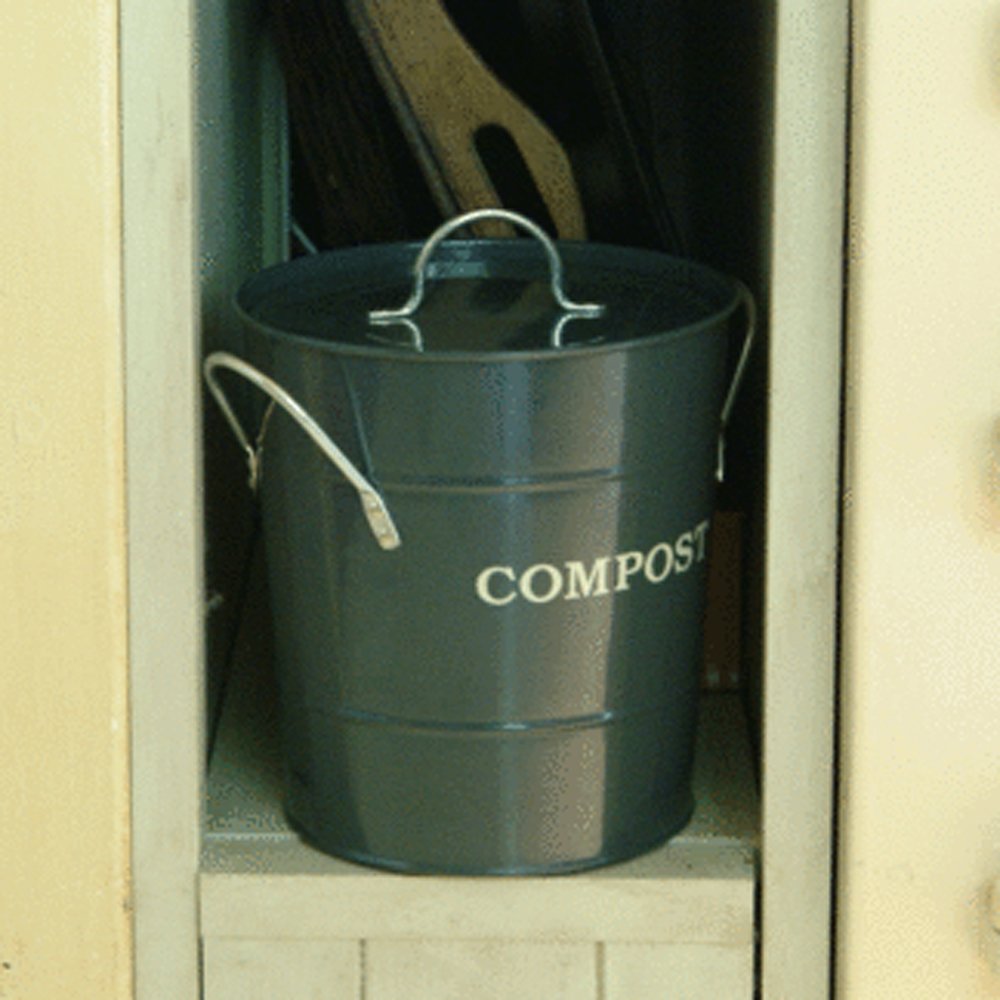
Bounty Meditations: The Compost Bucket


Our compost bucket speaks to me every day.  And usually it's not very flattering.

Our compost bucket is one of those things I find myself taking care of whenever possible instead of letting anyone else touch it.  Because it's in that bucket that my different upbringing is pointed out.  I don't consider myself a wasteful person, but I don't eat the core of the apple.  I don't eat the rind of the watermelon, or the skin of the mango.  My child doesn't eat the tooth-breaking seeds found in guava.  And he likes the skin cut off his pears.  If I humored him, he'd still have me peeling his grapes. Burnt food in the bottom of the pot?  Put it in the compost. Unappetizing five day old leftovers?  Compost.

Our gardener's family, in contrast, has almost no compost.  Though they will throw a stem out the door here and there at times, they waste nothing.  I remember my horror the first time I let my housekeeper make us a meal called "chicken bones." This common Shona dish is made when the leftover chicken bones from a meal are gathered from everyone’s plates, rinsed, and stored for the next day.   They are then boiled in a pot with spinach or rape (both large tough greens here) and an (MSG laden) powdered chicken seasoning.  The dish is served, chicken bones and all, with Sadza.  One has to stop chewing and pull sharp pieces of bone out of one's mouth to eat it.  It is considered a special treat, as the amount of meat consumed in the Shona diet can be sporadic, dependent upon the economic circumstances of the family. Tasty, but I admittedly stopped at cracking the bones open to suck out the marrow.

On the contrary, we have cooked for our housekeeper and gardener a number of times.  We made a large family dinner for our gardener’s family one evening, and sat around our dinner table chatting as the gardener’s two children, Shown and Allister ("Lilly"), ate with Jonas on the floor.  Jonas (usually a good eater) had taken four bites, declared he was done, and had run away to play, leaving his full plate on the floor.  Meanwhile, five year old Shown ate a full two giant plates before asking his parents to be excused.  Little Lilly, though, methodically ate three plates of food with his chubby two year old fingers.  Every time he asked for more, I heaped his plate full and watched his eyes sparkle as I set the plate back down in front of him.  It was way too much for a two year old, but I wanted him to feel free to eat as much as he liked without being shy about asking for more.  Showing my love by overfeeding someone?  Yep.  That's pretty much my style.

Partially into his third plate, though, Lilly slowed down.  Suddenly he started bawling, hysterically wailing a number of Shona words I did not understand. It was alarming; Lilly was in a great deal of pain. I looked at the gardener's wife quizzically as she rubbed his stretched tummy.  "I'm sorry, Madame," she had apologized, embarrassed. "Allister is crying because he cannot clear his plate.  He has tried as hard as he can but now he is in pain."

"You have to eat what you are given," Shown chimed in. "That's the rule!"

I looked at my child's rotting plate in the corner and embarrassment washed over me.  Jonas would eat a snack later, for sure, when it was convenient for him.  Whenever Jonas is hungry, he gets food.  Meanwhile I had made Lilly sick with my lack of understanding.  

Taught from an early age, it is a truly impressive characteristic of many Shona people in my country. Waste not, want not.  Clear your plate.  Eat when you can get it, even if it makes you sick.  Be grateful for calories.  It's a stark contrast to where I come from.   I come from a land of abundance, where the focus is on not eating too much.  Where obesity troubles more people than starvation.  Where diet obsessions like limiting calories and fats and carbs and any other latest craze originate.  Where we try to speed up our metabolism so we can eat more.  Where we make light hearted jokes about the strange things our Depression-era relatives are willing to eat.  Where I have complained about my propensity to overeat before polishing off my child's plate. Where, patting myself on the back for self control, I have scraped Jonas' half-eaten plate into the compost bucket.

That horrible compost bucket.  If only it didn't speak so loudly.

Sunday, May 19, 2013

Bounty Meditations: Rediscovering Words

In the U.S. I used the word bounty for cheesy Thanksgiving dinner prayers or deep discussions about paper towels.  But it means something different in Africa.  Actually, it means a lot.

“Hi,” an orphan girl had said as she sat down next to me recently in a rural orphanage an hour out of my city. She looked ahead.

“What’s your name?” I’d asked her, amused.

“I’m Isabelle.  It means my God is a God of plenty.  My bounty will be good.” I had nodded.  “What’s your name?” she asked.

“It’s Cheri. Nice to meet you,” I’d smiled.

“But what does it mean?”

“Oh, umm… it means my dear or my darling in French.” She looked confused so I continued, “It means my love.

“And do you show it?” Isabelle looked at me with her eyebrows raised, expectantly.  I was pretty sure there was a forty year old in this kid’s body. “Do you show love?”

I had hesitated, not sure of how to answer. “Yeah… I hope so.  I hope that’s what people think of me.”

“Hope is not good enough,” she corrected me. “You must show it. You have to live your name.”  

Wow. Well, someone was teaching this kid, and apparently it wasn’t me. 

During a different orphanage visit I overheard children discussing the meaning of their names with a friend of mine. A little boy named Kutenda chimed in. “My name means you have to be thankful!" he had half-way announced proudly and maybe just slightly half-way complained.  Kutenda (actually meaning "to thank") was only four, but already he knew.

Words and names mean a lot on this continent.  They aren’t just symbolic. They are used as points of action and focus, like an idea one clings to. 

One of the most powerful words in my country is bounty.  On a continent where subsistence farming is common, where meager crops are life-blood, and where hunger and starvation are real, bounty is a focus. And certainly, Kutenda is right. You have to be thankful.  

When I mentioned this topic recently to a white local, she had looked at me surprised.  I realized once again that should I choose to stay in The Bubble, isolated from the non-affluent populations that are ever present but often ignored, I would never recognize powerful beautiful concepts, like bounty, that propel lives forward daily.  Over the next week I’m going to be sharing some quick thoughts about a word in which this blessed, affluent family could always use some more meditation.

Thursday, May 9, 2013

Becoming American

Last year on Patriot’s Day, I awoke on a couch in Boston, on a trip to say one last goodbye to Bostonian friends and a city we had come to adore over our many visits.  

This year was different.  I awoke at five-something in my own bed in Zimbabwe, groggy as my husband walked by and whispered to me that there had been a bombing, something about a marathon, and how our power had just cut out.  He walked away to the bathroom while I sat up in sudden panic. Half-way awake I rushed to the television, clicked it on and waited.  First there was nothing. Then a sudden power surge awoke our screen for a prompt few seconds. As the television rebooted, a CNN correspondent could be heard talking about a bombing as a map on the screen zoomed in toward the East Coast of the US. Then the power was out again. “Seriously?!” I had yelled as everything went dark.

And then I did what any panicked, newly woken idiot who had just come from living in the paranoia of New York City post 9/11 would do.  

I immediately called our American friends, lump in my throat, as a ridiculous amount of panic rose through me.  I pictured friends back home in Manhattan and my imagination ran wild as the phone rang. “Hi, Dan.” I had said.  “The US just had a terrorist attack. (sniff) Do you guys have power? (sniff sniff) Can you please just make sure New (sniff) York (sniff) City is okaaaay?!” As I hung up the phone to await a call back, I paced the floor. Kurt returned to laugh at me when he found out I had just made the equivalent of a drunk phone call in my exhaustedly illogical stupor.

Sorry, Dan and Julie. Won’t happen again, ahem…

The tragedies surrounding Patriot's Day, like so many other tragedies over the past year, deserve our attention for a number of reasons. They remind us of things.  Important things.  And though I won't mention most of them here, they all have reminded me of something that is actually never far from my consciousness living in a place like Africa. 

I am American.

I admit I get uncomfortable with the concept of patriotism when it reflects a "we're better than you" mentality.  It can easily come off as immature and sort of weird when we all have the same maker. So I don't use the patriot label often.  This is a nice way of saying there have been times I have admitted I’m American like someone sitting in an AA meeting.  Yet this is ironic because I absolutely love the ideals of our country and the reasons so many like myself are proud to participate in it.  It's pretty much just when I'm confronted with the idiocy of Jersey Shore and fried butter that I start to slide down in my chair.

My husband's school teaches children from over 65 countries.  Many are from embassies or NGOs, and have moved a number of times in their short little lives because of their parents' careers. These children are often well cultured, amazing at making friends, and roll with the punches well.  But there is one thing that makes me incredibly sad about most of them.  Ask them where they're from.  They will pause, stammer, hesitate and then give a complicated answer that usually involves where their parents were born and something about their passports. The ex-pat lifestyle is a unique one.

My child is technically American, though already he has spent over a quarter of his life in a different country.  This is a nice way of saying that his accent is changing and already he knows which plant in the yard heals sick chickens. And though we are trying to embrace all that our new continent has to offer (we ate cooked flowers for dinner last night- amazing!) I am conscious that the longer we are out of the country, the harder it will be for Jonas to understand important things like Weezer, 30 Rock, and jello salad.

I could go on and on, about homesickness and why I can't find chocolate chips for the life of me in this country, about how I can't believe I'm missing the last season of The Office and how for one day I would like to walk into my bathroom to find a shower instead of a bathtub.  Oh, and a cheesecake.  For the love of God, can someone please send me a piece of cheesecake?  But that's not my point. I did not move to Africa to reproduce America.  I adore Africa, as is, pros, and cons, and pros that look like cons, and cons that look like pros, and every other combination possible. Love it.

But anyone who travels knows. It's a strange phenomenon that happens when you suddenly become the outsider.  Never have I felt as American as when I'm not living in it. The stark contrast of my perspective, born out of affluent safety and a logical love for all things contained within a People magazine, compared to native Africans of every color and economy, reminds me of my roots over and over.

I was reminded as I spent Thanksgiving watching others work while I sat and ate squash-in-place-of-pumpkin pie. I was reminded as we caught bits of the Superbowl at 4 am while others slept around us. I am reminded whenever it becomes 60 degrees and I am looking for a non-existent heating thermostat.  I am reminded whenever it becomes 80 degrees and I am looking for a non-existent air conditioning knob. I am reminded whenever I pull my hair out over power outages while those in the rural areas around us are amazed at the hours we do have this magically beautiful thing called electricity.

I learn new and wonderful things every day.  My perspective shifts and I slowly evolve. But apparently what I am learning most is actually about where I have come from.  It is slowly becoming clear; for better and worse, I will always be an American, wherever I go.

Thursday, March 28, 2013

Geography


Geography is on my mind.

We have been busy this week trying to pack and prepare  for our spring/"fall" break.  Confusing?  Yes, I agree.  Preparing for our upcoming African travels has reminded us of previous conversations we've had with our American cohorts about Africa...

When we first called our family and friends a year ago to tell them the news that we were moving to Africa, we were met with three responses.

Response One, mostly from the adventurous souls in our life: "WOW! Can I come visit?!" An excited congratulations is then followed by discussions of bucket lists and how they have always wanted to go to Africa. They must take advantage while they know someone there.

Response Two, mostly from family who will never visit us:  "Have you ever been there before?" These are the people who thought we would be eaten by lions within the first three months.  (Never mind that we were hit by a car.  No, I have not come even close to a lion bite.)

Response Three, mostly from the most honest souls in our life: "Where is Zimbabwe?"

Indeed we learned a lot about our loved ones and their geographical perspectives when we decided to move here.  Though Kurt and I were both raised being told that we could go anywhere and do anything, it was clear no one really expected it to happen. And when we first relocated to New York City out of the Midwest, there were a number of people in our lives who acted as though we had moved to a foreign country, unreachable on the other side of the world.  And surely we must have thought we were better than those we had left behind.

Of course, when Kurt and I relocated to the East Coast, we expected to find a NYC full of multicultural experts, able to ace any geography quiz.  In such a diverse city we were shocked and schooled to find that, although there were some globally savy people, there were also many city dwellers that could tell you twelve ways to get to Times Square, but could not point to the state of Iowa on a map. 

It taught us something we have observed everywhere we've gone since.  Perspective is a fascinating thing.  What is important to one person to know is irrelevant to another, depending on geography and a number of other crazy factors. And our perspective, therefore-whether it is or is not relevant to another- is surely no more or less valuable than someone else's.

As we continue making our plans for what to see while we are on this continent for the next three years, Jonas' developing perspective is on my mind.  Kurt and I both know a number of people that have no desire to travel outside of the US, whether they have loved ones abroad or not. And though we respect their feelings as we learn more about this crazy evolution called "perspective", our time abroad continues to remind me of one very important thing:  Never do we want our child to feel limited in his options, scared of what unknowns the world holds, or uninterested in the value of discovering other perspectives. If our travels do nothing else, we want to ingrain in Jonas a sense of adventure and possibility.

Jonas can go anywhere and do anything. Not just saying that, Jonas.  Seriously.

Stick with us and watch another African road trip unfold, starting this week...

Sunday, February 24, 2013

"Miata Basa" Week

I've been saying "miata basa" all week.

Miata basa (pronounced my-tah bah-sah) is one of the most useful Shona words I have in my vocabulary.  It thanks a person and acknowledges with gratitude, "You have done work for me."  And oh, have people done work for me this week.... 

We've had some exhausting weeks here, but we are on the tail end of a doozy.  

Wednesday: Dead car battery.  Friend Karyn comes with cables for a jump.  I am nervous- no idea how to even open the hood of this borrowed car- but as Karyn just jumped her husband's car that very morning (welcome to the African auto industry), she is ready and able. Miata basa, Karyn!

Thursday morning: Our security alarm has been broken since, well... basically since we got here.  It's not that it doesn't work well enough.  It's that it works too well... our alarm has been going off in the middle of the night at least twice a month due to a creepy false alarm indicating the movement of the interior side of our bedroom windows while we sleep.  But over the past few weeks it has increased to going off every night at least once between 12 and 3 am.  (Awesome with a three year old.) After 7 or 8 times of having the repair team attend to this issue, the housing manager switches companies and brings in someone new to deal with our mystery. They spend almost six hours working on it, and finally "finish" everything Thursday morning.  Miata basa, security guys!

Thursday afternoon: We have a new hot water heater (here they are called "geysers") then installed in our home.  (And by "new" I mean a dented thing that fell off the truck twice in America before being sent to Africa for safe keeping.)  We waited seven months for this lovely new piece of high-tech wonder, which heats half of our home's water.  

(Quick infrastructure lesson:  Water, filtered by mother nature herself, is pumped cold out of the ground from a thing called our "borehole" -when we have electricity, that is- and goes straight to our tap or to one of our two geysers, both of which are located above the house in the attic.  Gravity is used to create water pressure -terrible, terrible water pressure- to then send the hot water down to sinks, tubs, etc.)  So yes.  Our hot water heater needs to be carried 15 feet off the ground... 

Here two handy-men and our gardener open up our roof, done by removing cement tiles.

Next our rafters are sawed through to provide an opening for the old geyser to be removed and the "new" one to be installed. 

Here comes the old geyser, being removed from the attic.  This is not a light piece of equipment... especially with all of that rust and lead paint in it.

I love how the guy on top thinks his tiny piece of dental floss will catch the geyser if it falls!  Two hands, buddy.

This is no small task.  Kudos to any man who can carry a hot water heater on his head down a ladder.

Miata basa, strong workmen!

Thursday evening: We cannot find Jonas' beloved baseball hat anywhere. Searching for it, a quick trip to the grocery store, and an unsuccessful run to the petrol station (they are out of the diesel we need) fill all of our time before Kurt arrives home just in time for dinner after his ball practice. Kurt plays with Jonas all evening while I cook.  Miata basa, Kurt!

Thursday night:  It is close to midnight.  I have just completed two loads of laundry, and cooking four lasagnas, thirty cupcakes, and a large basketball cake for tomorrow's basketball awards dinner for Kurt's team.  I have convinced husband Kurt to stay up late doing dishes after putting Jonas to bed.  It is around this time that we realize the new geyser in the attic, running all evening for laundry and dishes, has been raining down water through the ceilings into the rooms below.  We then empty out two closets and a bathroom, trying to keep dry ourselves and praying the crumbling, sopping brown ceiling does not cave in on us.  It continues to "rain" in our house all night long.  Miata basa, Kurt!

Friday morning: The security team calls to see how the alarm works.  You have to explain that because of water flowing through the alarm panel, you could not even turn it on, let alone run it for the night.  You apologize and promise to let them know if you can turn it back on when it eventually is emptied of water. Our gardener Shoman cleans up from the flooding while a new plumber comes at 7 am.  Dressed in a suit and tie, he was clearly not expecting the school's emergency call. But thankfully, he rolls up his sleeves, and gets to work with two others for over three hours.  When he arrives, he calls it a "disaster," but by the time he finishes he was calls it... well... "still a disaster."  We are now waiting for everything to dry before the ceiling work begins next week.  Miata basa, Shoman and plumber!

Friday afternoon: Jonas and I are in our borrowed car on the way to the petrol station when it literally dies on the middle of an intersection half-way between our house and school.  The sun is beating down, I have no stroller, we have three large bags with us, and we are in a hurry.  I call friend Karyn again.  Though she is in the middle of teaching a class of pre-schoolers, without hesitation she jumps in her car to pick us up.  As we drive to the school, she reminds me that the car cannnot be left for more than a few minutes. It will be dismantled from the tires up if we do not get back to it immediately, and most likely phone calls had already been made to summon people to the intersection.  I interrupt Kurt's class (which I have never done before) and explain in a whisper.

Kurt runs around school for a few minutes while Jonas begs for lunch.  Kurt comes back with keys from a wonderful co-worker named Al, and we hop in his car to get back to the intersection.  As we drive, we chatter about how to transport the four lasagnas, thirty cupcakes, and one basketball cake to the party that night with no working vehicle.  Meanwhile we have no idea what to do with a car in the middle of an intersection if our one option does not work... We decide to get more gas.  Quintessential Zim car: the dashboard lights are nonfunctional, and without a gas gage, we have no idea how much diesel is in this borrowed piece of tin.

Kurt drops Jonas and I back off at the car, where we eat our sandwiches while Kurt drives home to get a jerry-can to fill with diesel.  Jonas and I watch while six men with tools in hand walk up the street eyeing the car.  When they realized we are in it, doors open and on the phone, they turn at the intersection and walk away.  Kurt returns, fills the car with diesel, and voila.  It works once again!  Kurt rushes back to school in Al's car, and Jonas and I rush to the petrol station for a real fill-up. Miata basa, Al, Karyn, and Kurt!


Friday evening: After spending the rest of the afternoon decorating the cake and cupcakes, Jonas and I rush to an after-school party at our friends' (the Mullens') house.  After a half hour, we rush back home and pick up food. We drive to our other friend's house to pop lasagnas in his oven for the basketball dinner, then drive to school to drop the car to Kurt.  We ride with "other friend" -also known as "Jon"- to his house, finish cooking food, and then enjoy the party when Kurt arrives with twenty-some high school basketball players.  After the party, we clean up, bid Jon goodbye, and head back to party #1 for another appearance. Miata basa, Jon!

Saturday morning: After turning the house upside down for days we find Jonas' missing hat outside in his stroller. Basketball tournament to finish off the season.  By this point I'm too tired to even describe.  We sit down back at home for lunch and sigh.  We have just survived our week.  Miata basa, God!


Monday, January 28, 2013

The Walls of Africa


This is my city.  A strange configuration of walls, potholes, and pedestrians.  I have tried for almost six months to get my brain around the walls, and I am still struggling.  As I discussed with a friend here recently (a friend who was just telling me how safe he feels here), there is a strange dichotomy that happens somewhere between feeling safe because you have walls, and feeling unsafe because you need to have walls.

Everyone has different things that make them feel safe; I have never felt safer than living in NYC among the masses.  Even when I'd return home to the Bronx by myself at 3 or 4 am, I felt secure in knowing that human life constantly surrounded me.  But when we moved to what suddenly felt like rural Connecticut (actually a small city, but just a stark shift from NYC), I was sure I was about to be abducted by aliens or a serial killer at any moment. I've come to learn that safety in numbers works for me, though not for all people.

I am coming to realize the walls of my new African city do not work for me.  I should feel safe.  There are millions of people, surely sharing the same kind qualities I have found in many strangers here.  But they are all hiding behind the isolation of walls.  And the walls speak clearly in the place of missing people.  To some they say "I'll protect you." But to not quite settled foreigners like me they often say, "Be afraid.  There are things you need protection from." The walls leave me with an uneasy feeling that I need to be on guard.

The walls add an extra element in getting to know, and feeling like one should trust, people in this country. It's also fascinating to see that many people here happily live their lives like, what I consider, caged animals.  Many local friends drive their SUVs in and out of walls, but otherwise rarely leave their comforts.  They go from gate to gate, wall to wall, never quite at ease beyond them, and they live life with that as a normality.

This is not intended to be commentary on the racial complexities of a place like Africa. Just a this-has-been-my-experience moment... I cannot tell you how often I have been walking my baby among the likes of fifteen Shona pedestrians, only to have an SUV driven by a white person pull up beside me and ask if everything is okay, and if we need a ride.  I recognize the friendliness in this gesture. But the experience also gives me a strange impression of who feels safe beyond walls, or rather maybe, of who has the option of being behind walls. Like I said, I'm not making commentary, so please, no angry emails! Just trying to still wrap my head around what the walls mean to me, and what they mean to others.  Six months here and still uneasy...

Meet the walls of my neighborhood. 

 
 Though every household has different looking walls, there are a number of common features. Most wallls are 6 to 12 feet tall. These concrete walls pictured above are common, with (hard to see) electric fencing running across the top of the fence line and across the black moving gate. Most gates have security signs indicating which security team responds to security breaches.  The one above, Safeguard, is one of the most common.

 
Most often gates over a driveway are solid so outsiders cannot see in, so the two pictured above are a little less common in that way. (I have pictured a lot with see-through gates just for the purpose of showing what's on the other side.) The white box in front of the 41 is a floating buzzer.  Cars drive up, open their window and ring the buzzer. Most people have a control panel inside of a communal room in their home that they can push a button on to open the gate.  We also have remote control key-chains to open the gate from outside of the walls.

The walls surround a property, not just border the front of it. Between neighbors walls almost always butt up to each other, but there is usually a good amount of space between the walls and the roads outside of them. Many walls, like above, are overgrown with ivy.

Here the walls still exist, this time within overgrown shrubbery surrounding it.  This is done often to prevent painting maintenance.

Dogs in this country are most often used as security.  (Even when we have walked around with a small cocker spaniel puppy, we find people were afraid.)  Dogs are not cute cuddly things as often here.  It is hard to see, but on the top of the green wall, above the security sign are broken glass bottles that have been glued along the top of the wall.  Very popular.

Here is another example in which the wall goes up about 6 feet, then iron bars with spikes on the top finish it off.  The neighbor has razor wire running around the perimeter of their property. 

Ditches for water drainage during the rainy season are almost always found in front of walls.  You can see the driveway (far left) is a little raised with a pipe running under it.

The hole in the wall is a mailbox.  Mailboxes are made of small holes in the wall that are big enough for a rolled-up paper to go inside, but not large enough for hands to fit through.  You must be on the inside of the wall to open the mailbox... so be sure before you put that love letter in your neighbor's box!

Some entry ways are very unique. Pegs (pictured left) or large rocks (pictured right) are often put along the front edge of properties to deter foot traffic and car-parking.  This makes pushing a stroller doubley hard!

When walls break apart, if the owner cannot immediately get it fixed, they are often secured with over-night guards, or shored-up with random objects until a permanent fix can be made.

 
Many walls have businesses behind them, too.  These are often hard to find, unless they are nursery schools. Almost all nursery schools have paintings on the walls to designate themselves.

 
Guard huts just outside the walls can be found in some neighborhoods.  In these neighborhoods, houses each pay a monthly rate (our friends' is $15 a month) and pool to get a night guard on the street. Night guards sit in these huts, watching for anything dangerous. What they are supposed to do then is a bit of a mystery, as most are not paid well enough to risk their lives, and there are few people to call for help.  The guard booth above is on a street close to ours... It used to be a normal three sided shed, but this past month someone took it over and made it into a 3' x 3' home by putting up bamboo posts and something over the hole in the side.  Whatever works for shelter.

More examples...